
First Aid
Qualsafe Course’s we deliver
-
The Health and Safety (First Aid) Regulations 1981 require all employers to decide to ensure their employees receive immediate attention if they are injured or taken ill at work. This includes carrying out a risk assessment, appointing a suitable amount of first aiders and providing appropriate first aid training.
However, having the correct first aid provision in the workplace is not just a legal requirement, it is incredibly important for the safety of all members of staff! The
Qualsafe Level 3 Award in First Aid at Work (RQF) qualification is specifically designed for individuals who wish to act as a first aider in their workplace.
Successful candidates will learn how to manage a range of injuries and illnesses that could occur at work and will be equipped with the essential skills needed to give emergency first aid.
What’s more, as a regulated qualification, employers can book this course for their employees and rest assured that they have fulfilled their legal responsibilities for providing quality first aid training, without having to undertake any lengthy due diligence checks.
What is covered:
The role and responsibilities of a first aider
Assessing an incident
Managing an unresponsive casualty
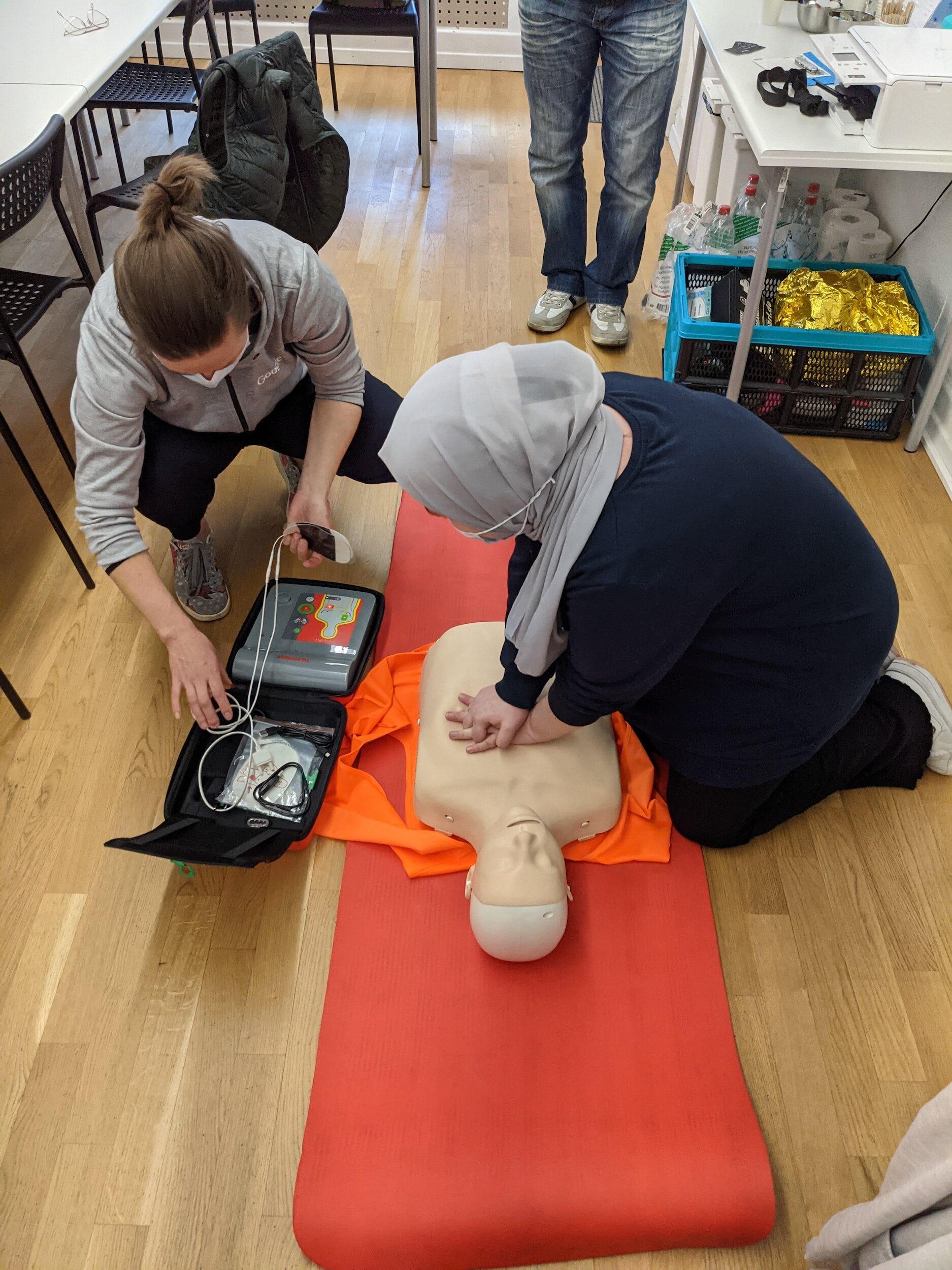
CPR and defibrillation
Recovery Position
Heart Attack
Stroke
Choking
Epilepsy
Asthma
Diabetes
Anaphylaxis Shock
Head and spinal injuries
Chest injuries
Wounds and bleeding
Fractures
Sprains, strains, and dislocations
Minor injuries Burns and scalds.
Poisoning
Eye injurie
This is 3-day course 18 hours and valid for 3 years.
-
Did you know that all workplace first aiders must complete requalification training every 3 years to continue carrying out their role? The Qualsafe Level 3 Award in First aid at Work (RQF) Requalifying Course is specially designed to allow first aiders to renew their first aid at work qualification when their certificate is due to expire.
During this 2-day course, candidates will have the opportunity to practice essential first aid procedures, as well as learn the latest techniques for dealing with emergency situations and managing injuries and illnesses in the workplace. What more, as a regulated qualification, employers can book this course for their employees and rest assured that they have fulfilled their legal responsibilities for providing quality first aid training, without having to undertake any lengthy due diligence checks.
What is covered:
The role and responsibilities of a first aider
Assessing an incident
Managing an unresponsive casualty
CPR and defibrillation
Recovery Position
Heart Attack
Stroke
Choking
Epilepsy
Asthma
Diabetes
Anaphylaxis Shock
Head and spinal injuries
Chest injuries
Wounds and bleeding
Fractures
Sprains, strains, and dislocations
Minor injuries Burns and scalds.
Poisoning
Eye injurie
This is 2-day course 12 hours and valid for 3 years.
-
The Health and Safety (First Aid) Regulations 1981 require all employers to decide to ensure their employees receive immediate attention if they are injured or taken ill at work. This includes carrying out a risk assessment, appointing a suitable amount of first aiders and providing appropriate first aid training. However, having the correct first aid provision in the workplace is not just a legal requirement, it is incredibly important for the safety of all members of staff!
The QA Level 3 Award in Emergency First Aid at Work (RQF) qualification is designed for individuals who wish to act as an emergency first aider in their workplace.
Upon successful completion of this qualification, candidates will be equipped with the essential skills needed to give safe, prompt, and effective first aid in emergency situations. What’s more, as a regulated qualification, employers can book this course for their employees and rest assured that they have fulfilled their legal responsibilities for providing quality first aid training, without having to undertake any lengthy due diligence checks.
What is covered:
The roles and responsibilities of an emergency first aider
Assessing an incident
Managing an unresponsive casualty
CPR and defibrillation
Recovery Position
Choking
Seizures
Shock
Wounds and bleeding Minor injuries
Cuts, grazes, and bruises
Minor burns and scald.
This is a 1-day course 6 hours and valid for 3 years.
-
The Early Years Foundation Stage (EYFS) Statutory Framework requires all early year’s providers in England to have at least one person who always has a current and full paediatric first aid certificate on the premises and available when children are present.
Providers should also consider the number of children, staff and layout of the premises and increase their paediatric first aid provision accordingly to ensure that a paediatric first aider is available to respond to emergencies quickly.
The QA Level 3 Award in Paediatric First Aid (RQF) has been specifically designed to meet the criteria set by the Department for Education’s EYFS Framework and is
ideal for:
• Those who have gained a level 2 and/or level 3 childcare qualification and have
entered an early year setting and wish to be included in the staff to child ratios to comply with EYFS requirements.
• Registered childminders and assistants who are required to hold a current and full
paediatric first aid certificate to comply with the EYFS requirements.
• Anyone who has a non-professional involvement with infants and children, such as parents, grandparents and want to learn key paediatric first aid skills.
Successful candidates will learn the roles and responsibilities of the paediatric first aider and will be equipped with the necessary skills to administer safe and effective treatment when dealing with a range of paediatric first aid situations.
What is covered:
The roles and responsibilities of a paediatric first aider
Assessing an emergency
Dealing with an unresponsive infant or child
Recovery Position
CPR and defibrillation
Choking
Head, neck, and back injuries
Fractures
Anaphylaxis and allergic reactions
Meningitis
Asthma
Febrile Convulsions
Seizures
Diabetic Emergencies
Poisoning
Burns and scalds.
Electric Shock
External Bleeding Hypovolaemic Shock
Eye, ear, and nose conditions
Bites and stings
Minor Injuries Treatment for hot and cold body temperatures
Newly qualified entrants to an early year setting who have completed a level 2 and/or level 3 qualification on or after 30th June 2016, must also have either a full paediatric first aid or an emergency paediatric first aid certificate within three months of starting work.
This is 2-day course 12 hours and valid for 3 years.
-
The Combined First Aid at Work and Paediatric First Aid Course is ideal for those who work in settings that require both first aiders and paediatric first aiders, such aa schools, sports clubs, or other childcare settings.
Combining the Qualsafe Level 3 Award in First Aid at Work (RQF) and the Qualsafe Level 3 Award in Paediatric First Aid (RQF) into 3 extended days of classroom learning, this specially designed course enables candidates to gain the skills and knowledge needed to provide both adult and paediatric first aid, whilst minimising the number of training days required to achieve both qualifications.
Candidates will cover a range of topics needed to provide effective first aid for adults, children and infants including CPR and defibrillation, choking, stroke, head injuries, asthma and much more.
What is covered:
Roles and responsibilities of both first aiders and paediatric first aiders
Assessing an incident
Casualty assessment
Managing an unresponsive casualty.
Recovery position
CPR and defibrillation
Heart attack and Angina
Stroke
Choking
Epilepsy
Asthma
Meningitis
Diabetes
Anaphylaxis
Shock
Seizures
Febrile convulsions
Head, neck, and spinal injuries
Wounds, bleeding and hypovolaemic shock
Chest injuries
Fractures
Dislocations, Sprains, and strains
Burns and scalds.
Hypoxia
Hyperventilation
Minor injuries
Eye, nose, and ear injuries
Poisoning
Electric shock
Incident reporting
This 3-day course 22 hours minimum with extended days of learning and valued for 3 years.
-
Anaphylaxis is a severe and life-threatening allergic reaction, which medical attention. With the number of sufferers increasing each year, it is extremely important to know what to do when faced with this acute emergency condition.
The Qualsafe Level 2 Award in Basic Life Support and Management of Anaphylaxis (RQF) qualification has been designed for those who have a specific responsibility at work, at home or in voluntary and community activities, to provide basic life support and manage anaphylaxis when dealing with an emergency.
Successful candidates will be able to recognise the signs and symptoms of anaphylaxis and will be equipped with the vital skills needed to administer safe, prompt, and effective treatment.
What is covered:
Chain of survival
Incident and casualty assessment
Managing an unresponsive casualty
CPR and defibrillation
Recovery Position
Common anaphylaxis triggers
Signs and symptoms of anaphylaxis
Treatment
Medication
Adrenaline auto-injector
This is a ½ a day course and certificate valued for 1 year. Ofqual regulated.
Content approved by the Anaphylaxis Campaign
-
External Defibrillator (RQF)
Did you know that following a cardiac arrest, every minute without CPR and defibrillation reduces a casualty’s chance of survival by 10%?
Sudden cardiac arrest is one of the UK’s biggest killers, and yet statistics show that most of the British public are unaware of the life-saving difference they can make by performing CPR and defibrillation.
The Qualsafe Level 2 Award in Basic Life Support and Safe Use of an Automated External Defibrillator (RQF) qualification has been designed to provide candidates with the skills needed to administer safe, prompt, and effective basic life support and use an AED safely in emergency situations.
With an estimated 60,000 out of hospital cardiac arrests occurring every year in the UK alone, make sure you are prepared.
What is covered:
Chain of survival
Assessing an incident
Casualty assessment
Managing an unresponsive casualty
Recovery Position
CPR AED safety considerations
Using an AED •
Combining AED use with CPR •
Using an AED on a child Procedures for when Emergency Services arrive
This is a ½ day course and certificate valued for 1 year. Ofqual regulated.
-
Is your Workplace Prepared?
Learn a brand-new set of life-saving skills; book your First Aid at Work course today! With our new Blended Learning option, you can now complete our innovative, online self-study e-Learning before completing two trainer-led days in the classroom practising the exciting, practical side of First Aid.
Under the Health and Safety (First Aid) Regulations 1981, all employers are required to plan to ensure immediate attention is given to employees if they are injured or taken ill at work.
Ofqual regulated.
1 day e-Learning 2 Days classroom.
Certificate valued 3 years.
-
If a child in your care need first aid – would you know what to do?
Ideal for anyone who cares for children in a professional or non-professional capacity, you will gain the necessary skills to administer safe and effective treatment for a range of paediatric first aid situations.
With our new Blended Learning option, you can now complete our innovative e-Learning before completing one trainer-led day in the classroom focussing on the practical side of Paediatric First Aid.
The Early Years Foundation Stage (EYFS) Statutory Framework requires all early year’s providers in England to always have at least one person with a valid paediatric first aid certificate on the premises and available when children are present.
Ofqual regulated.
1 day e-Learning 1 Day classroom.
Certificate valued 3 years.